Alibaba Exec Says US, China, India, Europe Are Still Cooperating on RISC-V Chips — Despite the Trade War
The US-China chip war is escalating by the month — export controls keep tightening, the Netherlands just restricted more ASML machines, and Washington is pressuring allies to cut China off from advanced semiconductors. But inside a conference hall in Hong Kong this week, a different picture emerged.
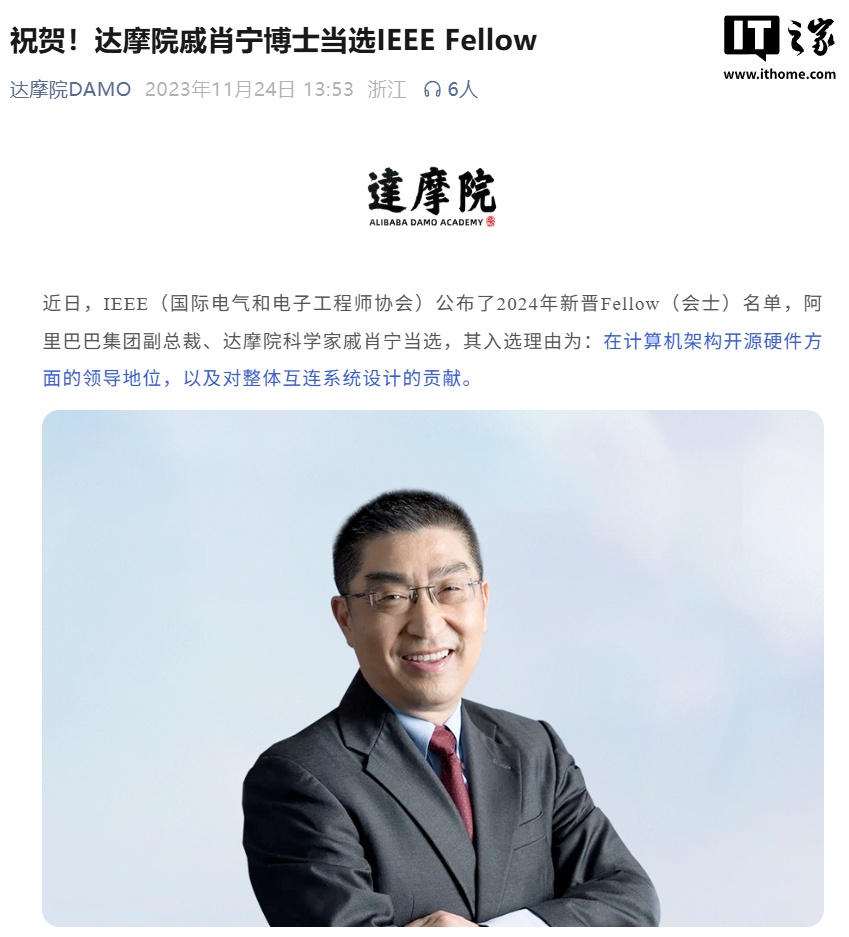
Alibaba Vice President Qi Xiaoning, who leads the company’s RISC-V team within DAMO Academy, told the South China Morning Post’s China Conference 2026 that companies from the US, China, India, Brazil, and Europe are still collaborating as a “unified ecosystem” on the RISC-V open-standard chip architecture. The architecture is designed for edge computing and cloud applications.
“When we use a single architecture, people from different continents and different cultures come together, work together, make friends — and like trade, we promote friendship between different countries,” Qi said at the event Tuesday. “Cooperation in RISC-V is already a reality. It’s happening.”
RISC-V is an open-source instruction set architecture, meaning any company can design chips around it without paying licensing fees. That makes it fundamentally different from ARM (which requires licensing) and x86 (which Intel and AMD control). For Chinese companies facing restricted access to Western chip architectures, RISC-V has become a strategic priority.
The scale of adoption is growing faster than many expected. Ni Guangnan, an academician at the Chinese Academy of Engineering, revealed in March that RISC-V has already captured 25% of the global processor market. That’s a significant share for an architecture that was largely experimental just a few years ago.
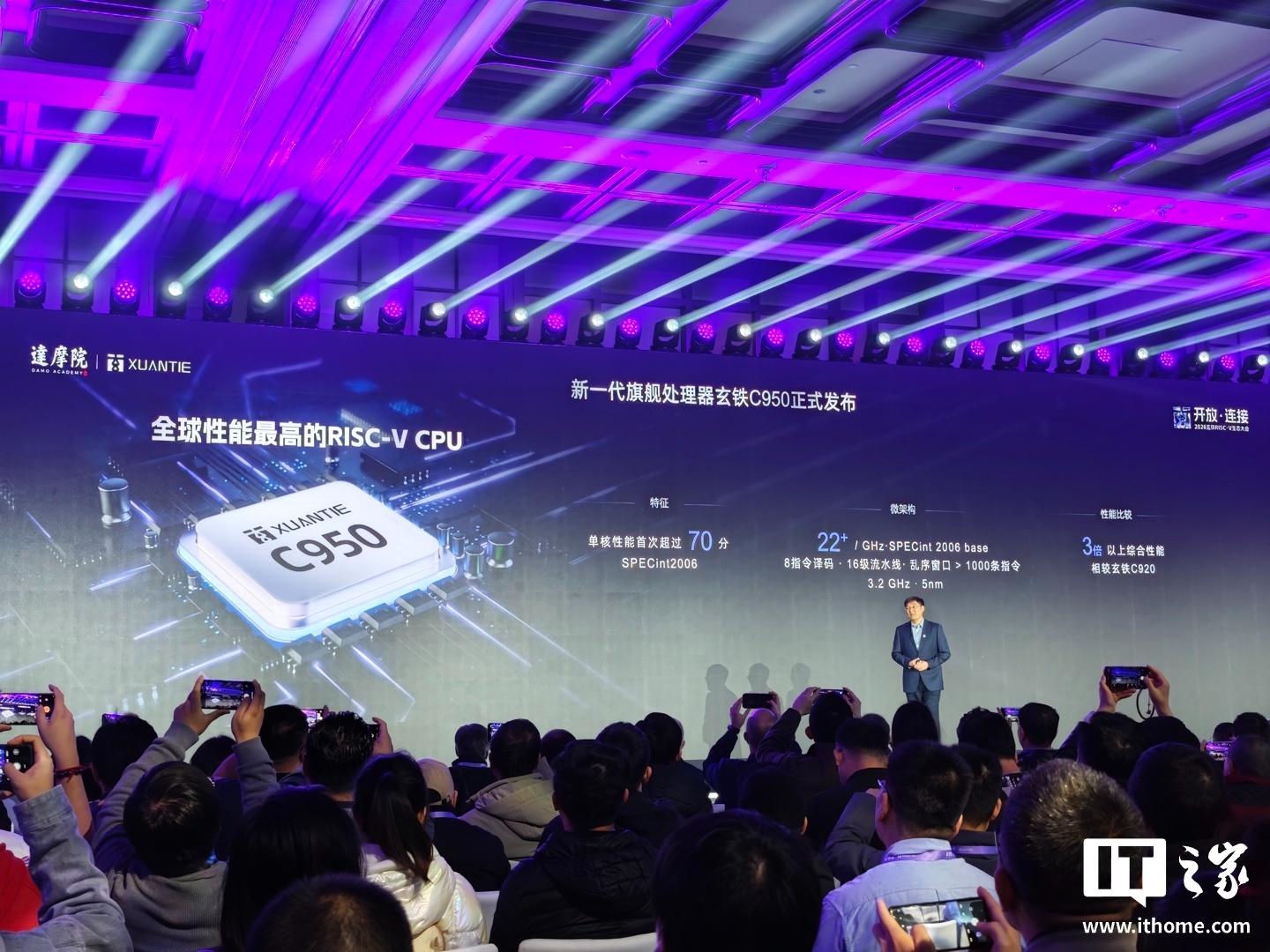
Alibaba’s DAMO Academy also released its latest RISC-V processor, the XuanTie C950, in March. It’s being described as the highest-performing RISC-V CPU on the market. Compared to the previous generation C920, the C950 delivers more than triple the comprehensive performance and scored over 70 points in the SPECint2006 single-core benchmark for the first time. The chip targets cloud computing and high-performance AI workloads.
The timing matters. Qi’s comments come at a moment when the US and China are digging deeper into a technology cold war. The Biden and Trump administrations both tightened semiconductor export rules, and the EU is considering its own chip restrictions. But RISC-V, precisely because it’s open and not controlled by any single country or company, appears to be one of the few areas where cross-border chip collaboration hasn’t collapsed.
Whether that holds is another question. The US has previously debated whether to restrict RISC-V access for Chinese companies — the open nature of the standard makes export control tricky. For now though, the architecture is threading a narrow gap between geopolitical pressure and technical reality.