NVIDIA Details Rigel Cores Powering Its 2028 Rosa CPU
NVIDIA has been quietly sketching out a server CPU roadmap that stretches years ahead, and on Monday the company filled in another piece of the puzzle. In a blog post, it confirmed that its next-generation data center processor — codenamed “Rosa” — will use a new core design called “Rigel.”
Rosa is the successor to Vera, the Arm-based CPU NVIDIA launched earlier this year as part of its push to build complete server platforms around its GPUs. Both chips belong to what the company calls the “Feynman” generation. Rosa is expected to arrive in 2028.
The Rigel cores inside Rosa comply with the Arm v9.2 instruction set architecture. NVIDIA says they deliver better single-threaded performance than the Olympus cores used in Vera, and crucially, the company claims it achieved those gains without increasing the core’s physical footprint. The improvements come from three areas: more efficient instruction delivery, a larger L2 cache, and more refined memory management.
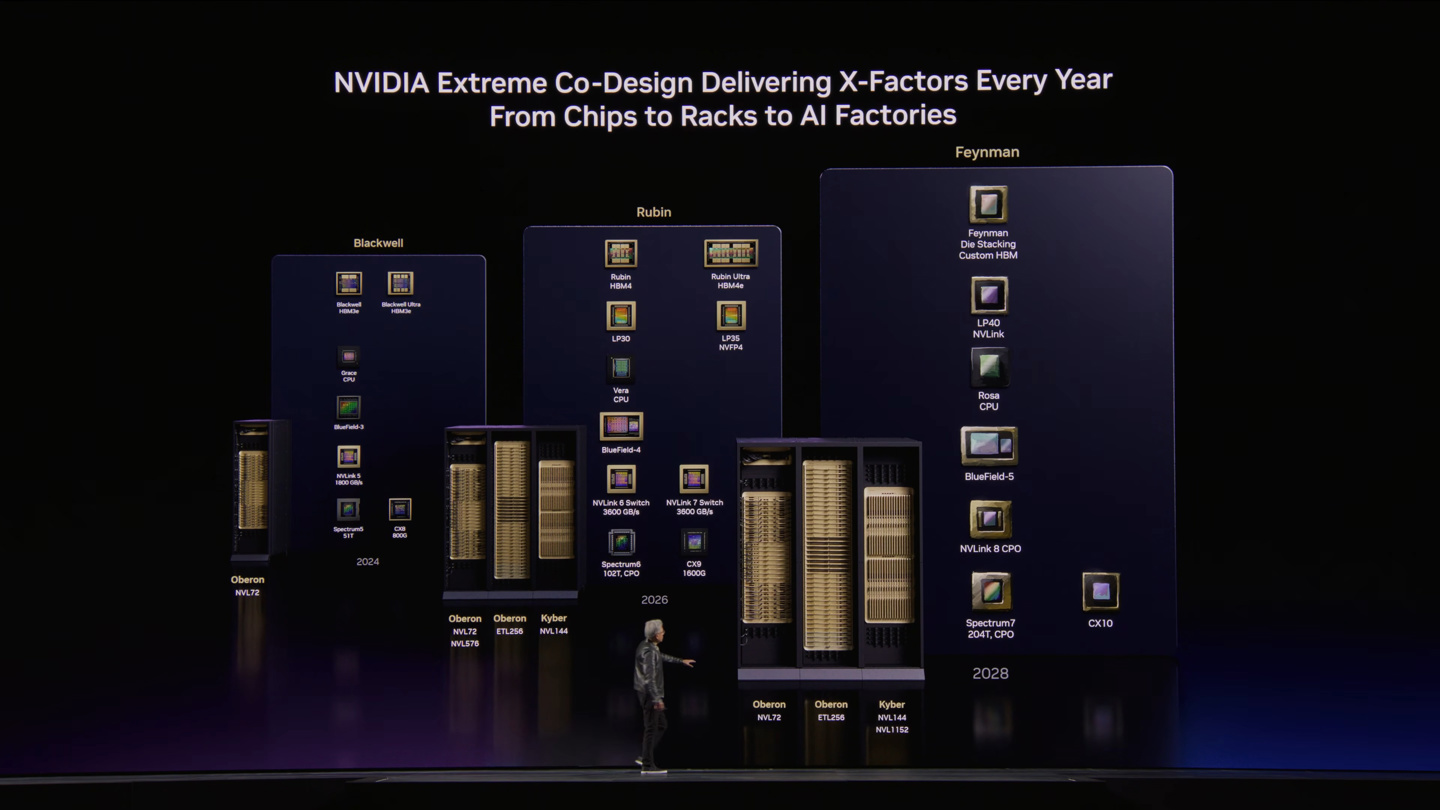
The performance-per-area improvement is worth noting. In the data center CPU space, where every square millimeter of silicon affects yield and per-chip cost, squeezing more throughput from the same die area is a meaningful engineering target. NVIDIA is essentially saying it can deliver faster per-core performance on Rosa than Vera without making the chip more expensive to manufacture.
Details on clock speeds, core counts, and memory controllers are still under wraps. But the confirmation of Rigel’s Arm v9.2 baseline suggests Rosa will support the latest architectural features from Arm, including improved virtualization and security extensions that hyperscale cloud operators increasingly demand.
NVIDIA’s CPU ambitions date back to its Grace and Grace Hopper Superchip designs, which paired Arm-based CPUs with its GPUs over a high-speed interconnect. Vera and now Rosa represent the next phase of that strategy — building CPUs that slot into the same NVLink fabric as NVIDIA’s flagship GPU accelerators, giving cloud builders a single-vendor, tightly integrated compute platform.
With Rosa still two years out, expect more architectural details to trickle out over 2027. For now, the headline is simple: NVIDIA’s Feynman-generation CPU story has its second chapter, and the core count is only going up from here.